

FUNDRAISING · INVESTOR READINESS · STRATEGIC DISCOVERY
A Pitch Deck Communicates the Opportunity. It Does Not Prove It.
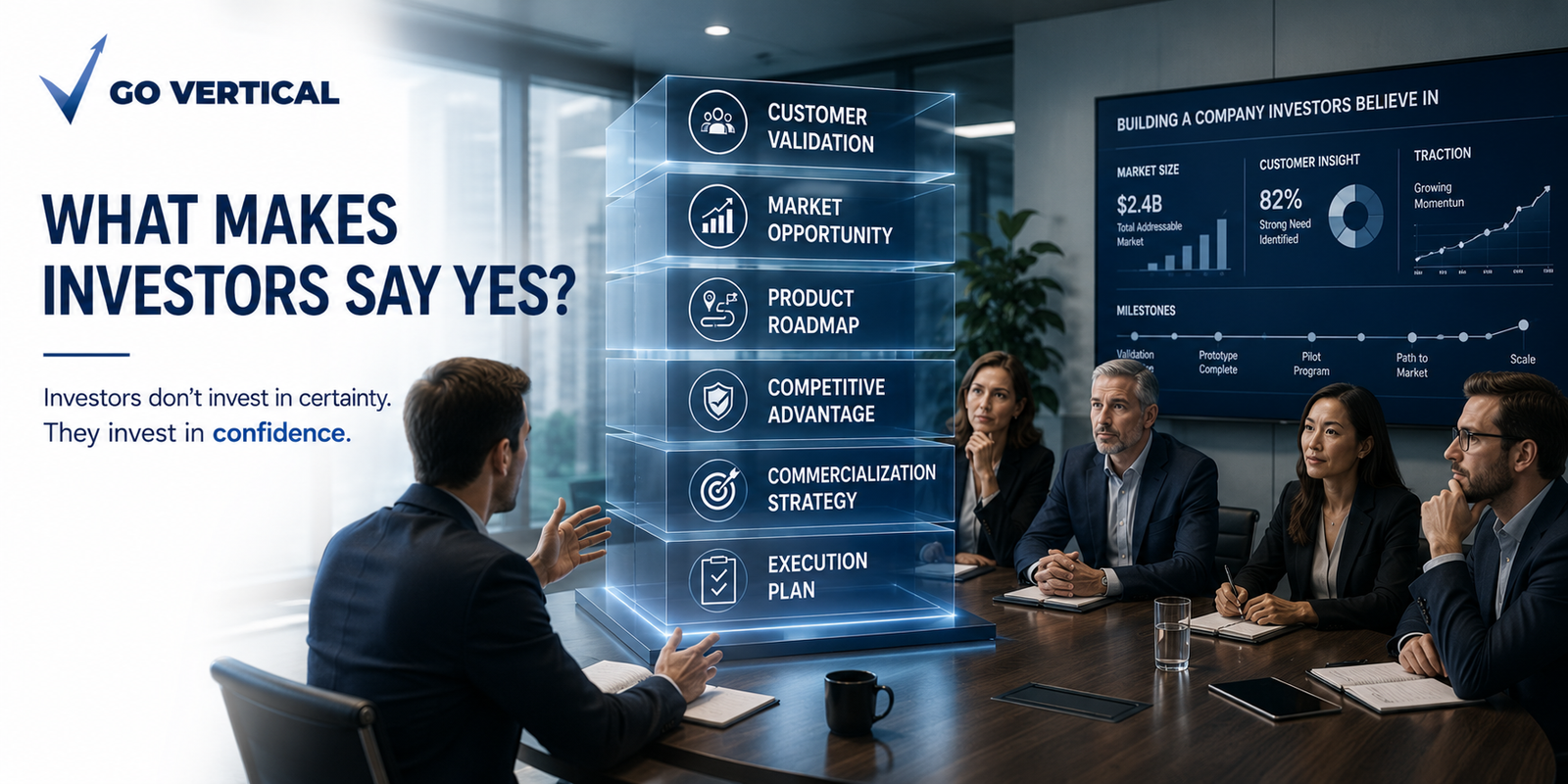
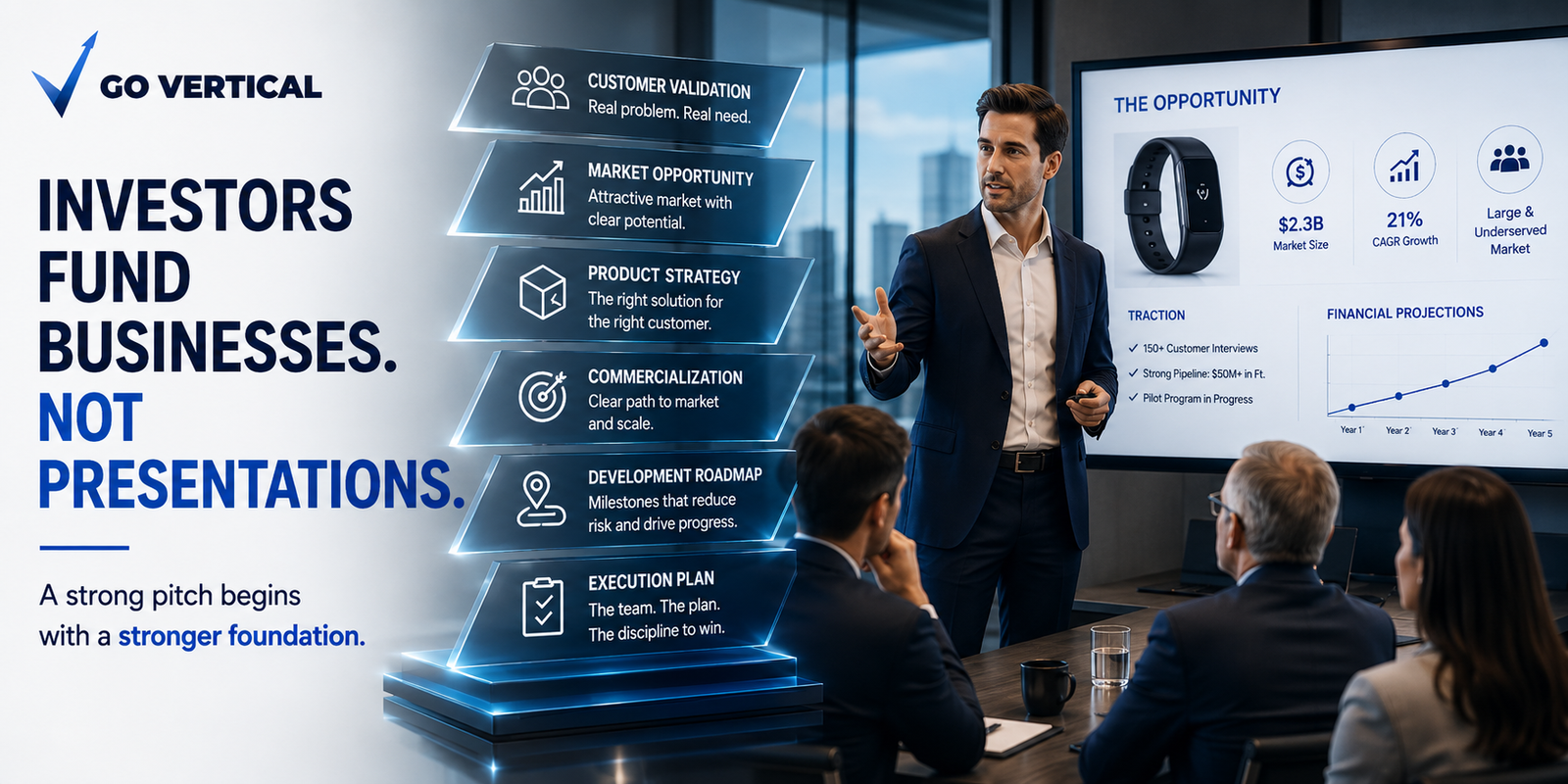
Investors use the deck to begin a conversation. The decision depends on the evidence, assumptions, risks, milestones, and execution plan behind the slides.
Narrative
A clear explanation of the problem and solution.
Validation
Evidence that users and customers care.
Execution
A realistic development and commercialization roadmap.
Funding Case
Defined milestones and disciplined use of capital.
Investors Aren’t Investing in Slides
A pitch deck is a communication tool.
Its purpose is to explain your business clearly and concisely.
What it cannot do is replace the work that investors expect has already been done.
Every slide raises new questions.
A market slide prompts investors to ask:
“How do you know this market exists?”
A product slide becomes:
“Why is this the right solution?”
A revenue slide becomes:
“What evidence supports these assumptions?”
The presentation creates interest.
Your preparation creates confidence.
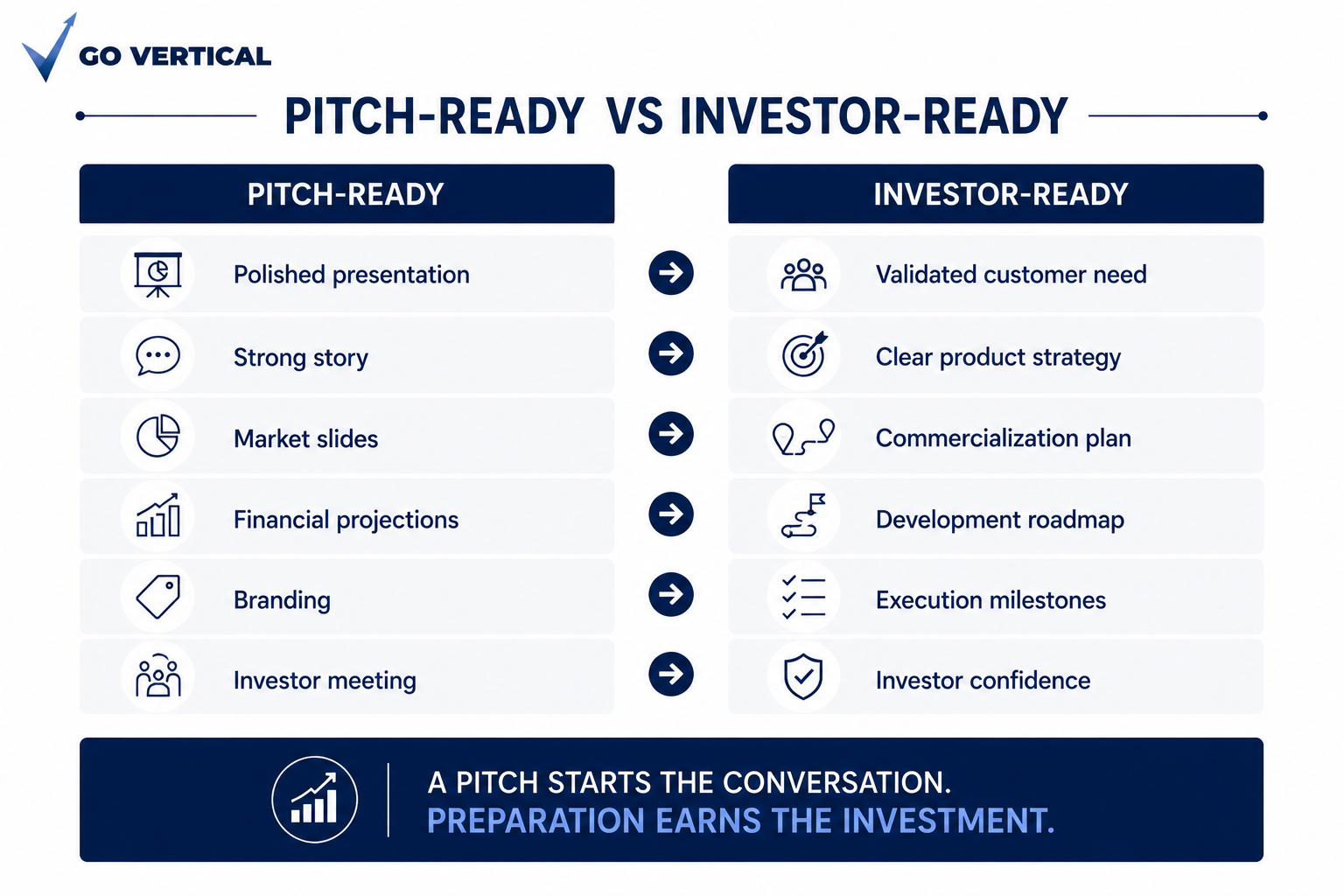
The Difference Between Pitch-Ready and Investor-Ready
Many founders believe these are the same thing.
They’re not.
Being pitch-ready means you can explain your business.
Being investor-ready means you’ve built enough evidence to support what you’re saying.
Investor readiness is built through:
customer validation;
product strategy;
commercialization planning;
market understanding;
execution planning;
milestone development.
The pitch simply communicates those foundations.
Investors Want More Than a Good Story
Stories matter.
Every successful founder tells a compelling story.
But investors invest because they believe the opportunity is real, not because the presentation was memorable.
Before making a decision, investors typically want to understand:
Is This a Real Problem?
Who experiences it?
How significant is it?
Why does it matter today?
Founders who deeply understand the problem immediately build credibility.
Has the Customer Been Validated?
Many startups fail because they build products customers never asked for.
Investors want evidence that founders have spoken with potential users, gathered feedback, and validated demand.
Real customer conversations carry far more weight than assumptions.
Is There a Clear Market Opportunity?
A large market alone isn’t enough.
Investors also want to know:
- Who is the first customer?
- How does the company enter the market?
- Why will customers adopt this solution?
- What creates long-term growth?
Focused strategies often outperform broad ambitions.
Is There a Roadmap?
Early-stage companies aren’t expected to have everything figured out.
They are expected to know what comes next.
A roadmap demonstrates thoughtful planning.
It shows that development, commercialization, and growth are intentional rather than reactive.
Can This Team Execute?
Ideas evolve.
Markets change.
Technology improves.
Execution is what turns opportunities into businesses.
Investors pay close attention to founders who make thoughtful decisions, adapt quickly, and understand the challenges ahead.
This Is Where Strategic Discovery Makes a Difference
Many of the questions investors ask should be answered long before fundraising begins.
That is exactly what Strategic Discovery is designed to accomplish.
Rather than immediately focusing on development or fundraising, Strategic Discovery helps founders understand:
- customer needs;
- market opportunity;
- product priorities;
- commercialization strategy;
- competitive positioning;
- technical feasibility;
- development milestones.
It gives founders the confidence to explain not only what they’re building, but why they’re building it.
Investor Confidence Is Built Long Before the Pitch
The strongest investor meetings rarely happen because someone created a beautiful presentation.
They happen because months of preparation created confidence.
Confidence in the product.
Confidence in the customer.
Confidence in the roadmap.
Confidence in the founder.
The deck simply tells that story.
How GO Vertical ICM Structures the Pathway
GO Vertical ICM separates validation from execution so founders can make larger commitments only after the opportunity and priorities are clearer.
Stage One
Strategic Discovery
Assess the customer, market, technical feasibility, intellectual property, regulatory considerations, business model, risks, and investor-readiness gaps before major development.
Stage Two
Creation Accelerator Program
Once the direction is selected, advance product development, prototyping, manufacturing preparation, commercialization, and fundraising support through an execution roadmap.
Build the Evidence Before the Ask
Start with Strategic Discovery to determine what should be validated, developed, and funded next. When the pathway is ready for execution, CAP provides the next stage of structured support.