

PRODUCT STRATEGY · VALIDATION · INVESTOR READINESS
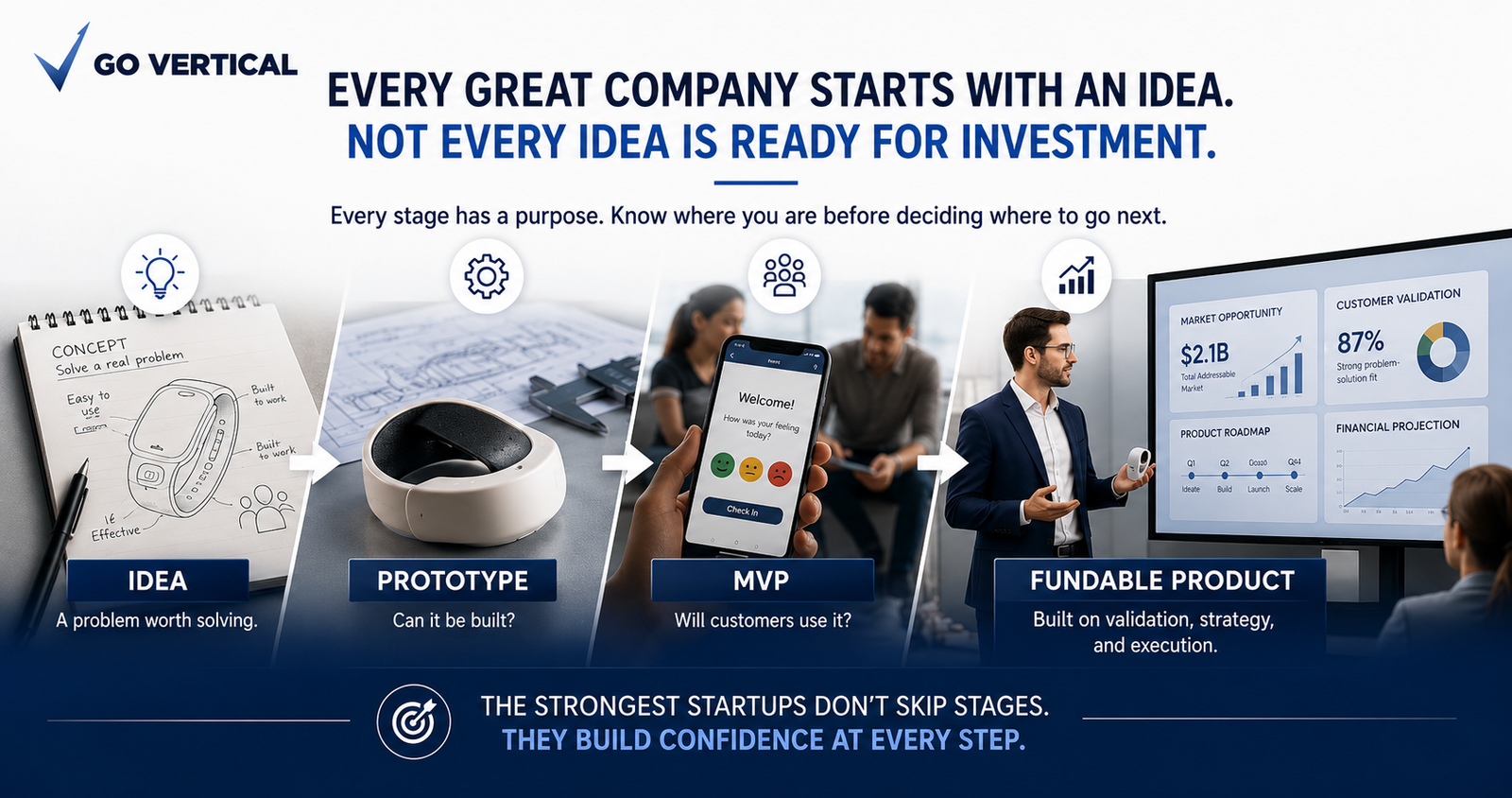
Idea, Prototype, MVP, and Fundable Venture Are Different Milestones
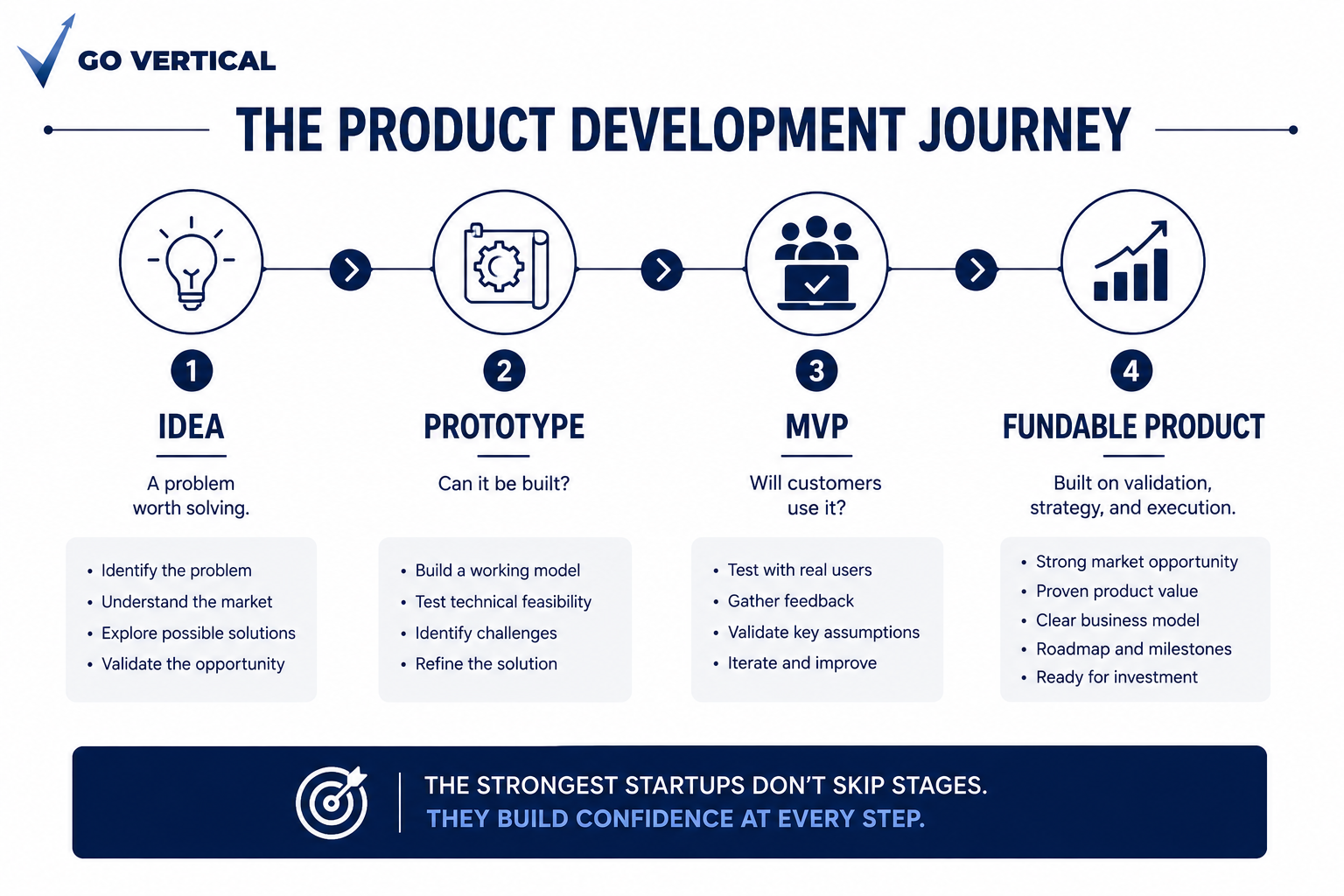
Each stage answers a different question. Treating them as interchangeable can cause founders to build too much, test the wrong assumptions, or raise before the company is ready.
Idea
Is the problem important enough to solve?
Prototype
Can the proposed solution work technically?
MVP
Will real users engage with the essential value?
Fundable Venture
Can validated learning become a scalable business?
Stage One: The Idea
Every successful company begins with an idea.
An idea identifies a problem and proposes a possible solution.
At this stage, founders should be asking questions, not building products.
Questions such as:
- Is this a real problem?
- Who experiences it?
- How are people solving it today?
- Why would someone choose a different solution?
- Is there a commercial opportunity?
Ideas create possibilities.
They don’t create businesses.
The objective during this stage is learning.
Stage Two: The Prototype
A prototype is the first attempt to turn an idea into something tangible.
It allows founders to explore whether a concept can actually work.
Depending on the product, a prototype may be:
- a physical model;
- an engineering proof of concept;
- a clickable software demonstration;
- a functional test version.
The purpose is simple.
Answer technical questions.
Can it be built?
Does it work?
What needs to change?
A prototype validates the solution.
It does not validate the market.
Stage Three: The Minimum Viable Product (MVP)
An MVP is often misunderstood.
Many founders think it means releasing a stripped-down version of the final product.
In reality, an MVP exists to learn.
It is the simplest version of the product that allows real users to interact with it and provide meaningful feedback.
An effective MVP helps founders answer questions such as:
- Will customers actually use this?
- What features matter most?
- What creates value?
- What needs improvement?
- What assumptions were wrong?
An MVP is not about perfection.
It’s about reducing uncertainty through real customer feedback.
Stage Four: The Fundable Product
This is where many founders become confused.
A product that works isn’t automatically investment-ready.
Investors evaluate far more than functionality.
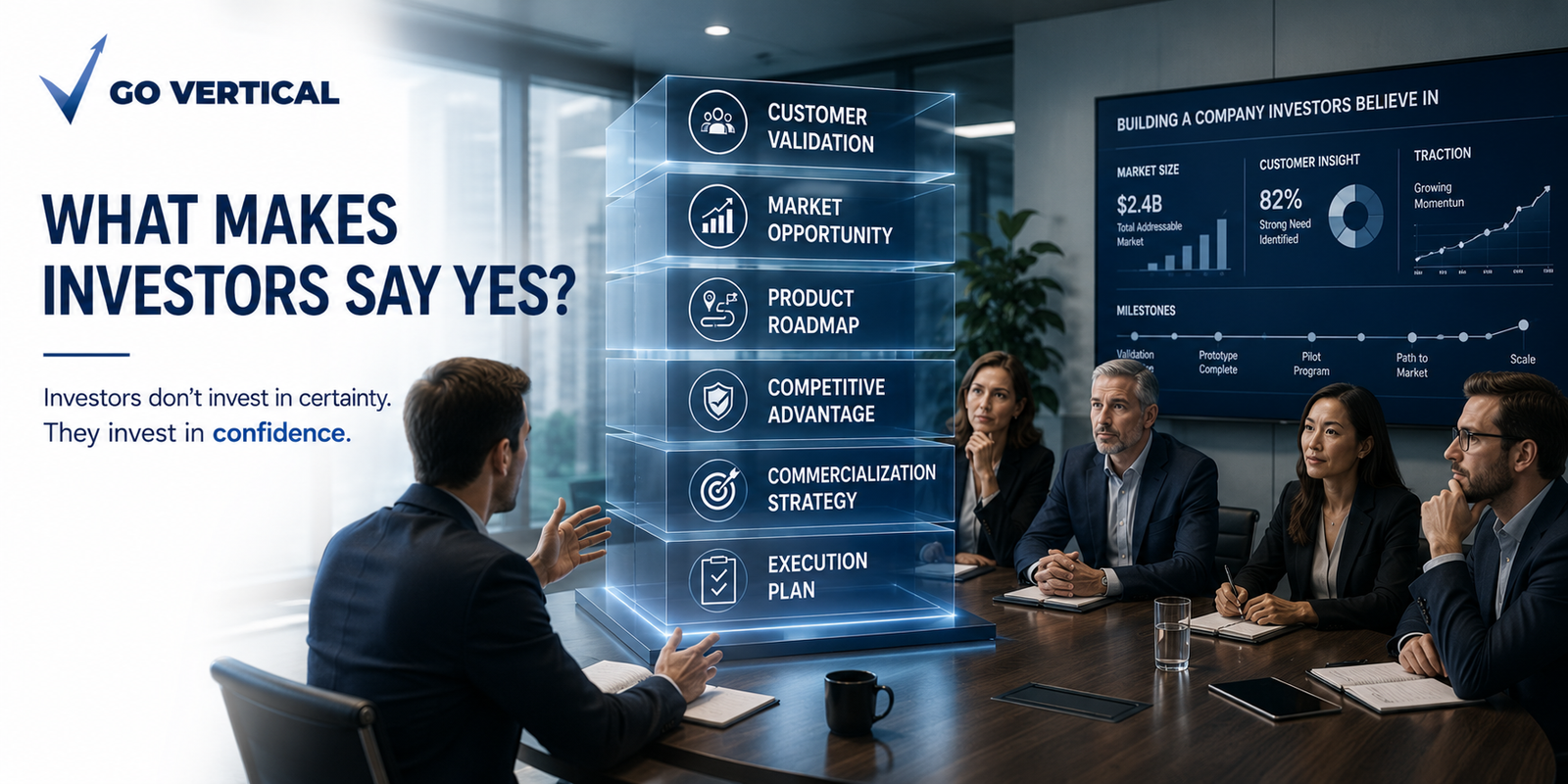
They want confidence that the company understands:
- its customer;
- its market;
- its competitive advantage;
- its commercialization strategy;
- its development roadmap;
- its execution plan;
- its future milestones.
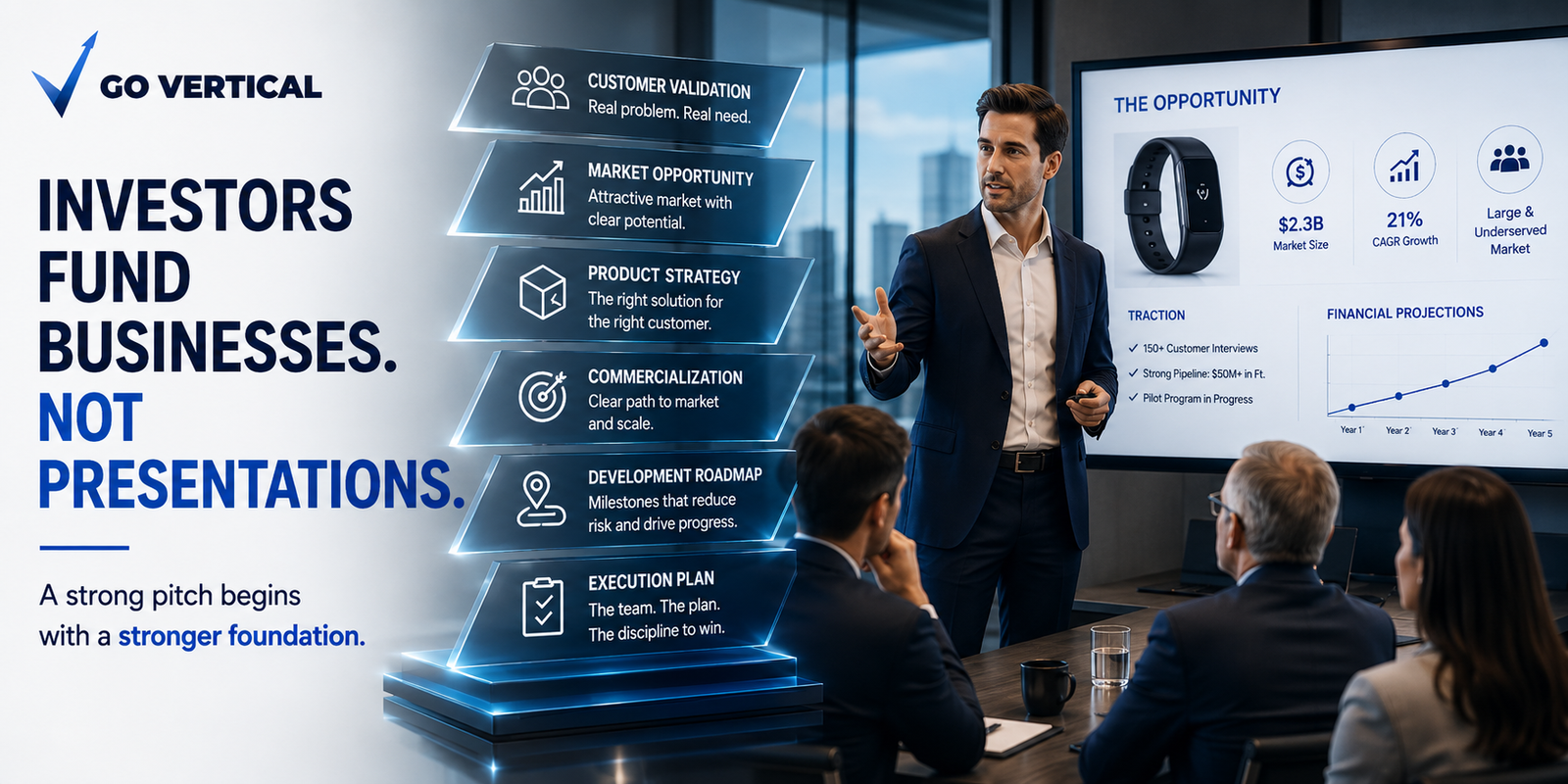
A company becomes more fundable when the product is supported by a credible business strategy.
Investors aren’t simply funding products.
They’re investing in businesses that have a realistic path toward growth.
Why Founders Skip Steps
The excitement of building often creates pressure to move quickly.
Founders rush into development.
They prepare investor presentations.
They begin manufacturing.
Sometimes they even launch.
Only later do they discover that important questions were never answered.
Questions about:
- customer demand;
- pricing;
- positioning;
- market entry;
- technical complexity;
- regulatory considerations.
Skipping these conversations almost always creates more work later.
Progress isn’t measured by how much you’ve built.
It’s measured by how much uncertainty you’ve reduced.
Building in the Right Order
Successful founders rarely move randomly.
Instead, they follow a structured progression.
First, understand the problem.
Then validate the customer.
Develop the concept.
Test the solution.
Learn from users.
Refine the business model.
Prepare for commercialization.
Strengthen investor readiness.
Each stage builds confidence for the next.
How GO Vertical ICM Structures the Pathway
GO Vertical ICM separates validation from execution so founders can make larger commitments only after the opportunity and priorities are clearer.
Stage One
Strategic Discovery
Assess the customer, market, technical feasibility, intellectual property, regulatory considerations, business model, risks, and investor-readiness gaps before major development.
Stage Two
Creation Accelerator Program
Once the direction is selected, advance product development, prototyping, manufacturing preparation, commercialization, and fundraising support through an execution roadmap.
Build the Evidence Before the Ask
Start with Strategic Discovery to determine what should be validated, developed, and funded next. When the pathway is ready for execution, CAP provides the next stage of structured support.