

517 Magazine Feature
Customer-Centric Innovation Starts With Understanding, Not Assumption
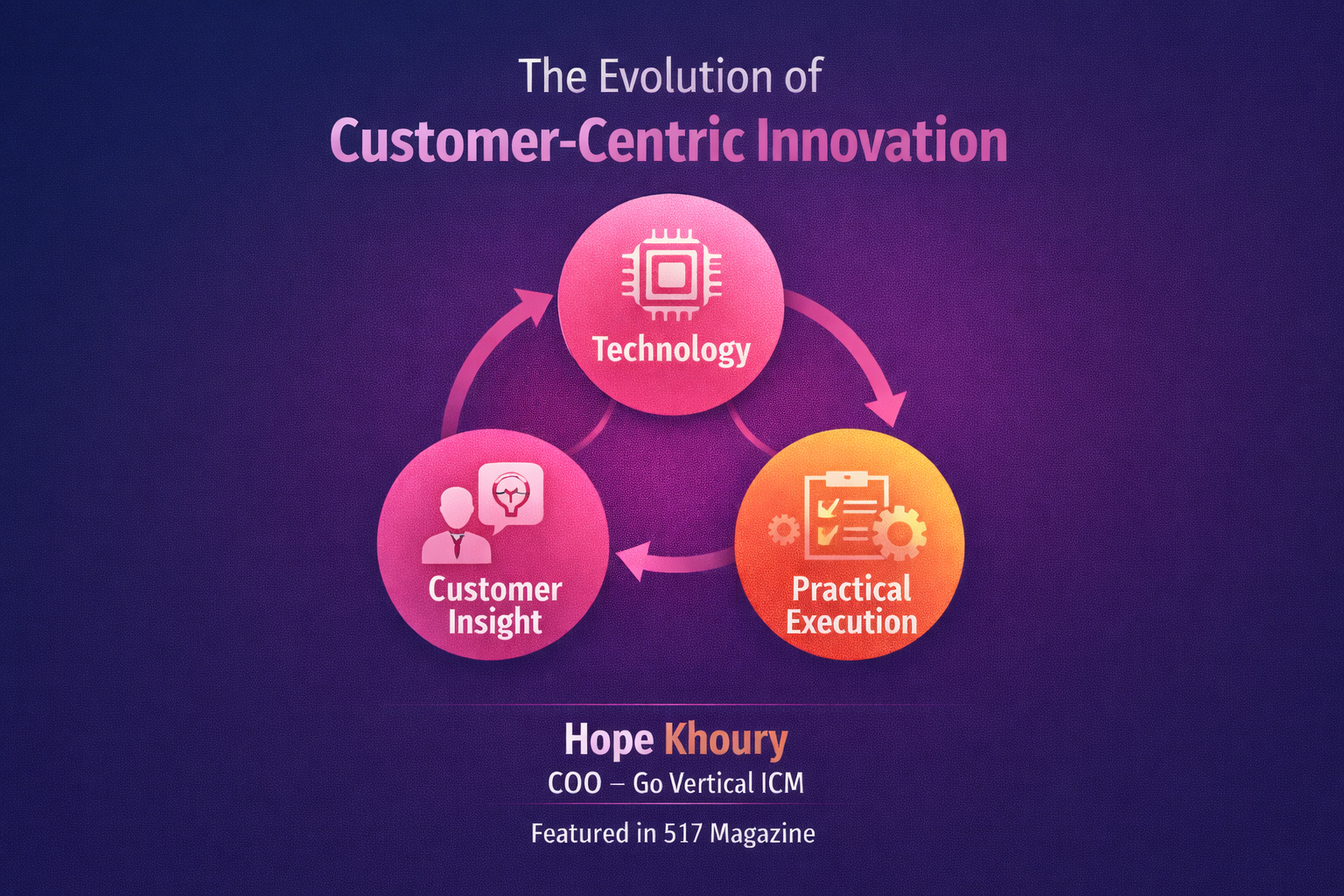
Hope Khoury’s 517 Magazine perspective explored why meaningful innovation begins with the customer’s context, behavior, and definition of value.
Listen
Use observation, interviews, and feedback to understand real behavior.
Define
Convert customer insight into clear needs and product requirements.
Test
Validate the experience throughout development—not only at launch.
Improve
Use evidence to refine both the product and the service around it.
Customer Experience Is Part of the Product
Innovation is not limited to technology or features. Every interaction—from discovery and onboarding to support and continued use—shapes whether customers understand, trust, and adopt a solution.
Feedback Must Influence Decisions
Collecting feedback is not the same as being customer-centric. Teams must translate insight into priorities, requirements, tradeoffs, and measurable improvements while distinguishing strong evidence from isolated preference.
Trust Is Built Through Consistency
A customer-centered company aligns what it promises with what it delivers. Clear communication, responsive support, usable design, and reliable performance help turn a transaction into a long-term relationship.
From Insight to Structured Execution
GO Vertical ICM separates validation from execution so founders can commit larger resources only after the opportunity, risks, and priorities are clearer.
Stage One
Strategic Discovery
Validate the customer, market, technical feasibility, intellectual property, regulatory considerations, business model, risks, and investor-readiness gaps.
Stage Two
Creation Accelerator Program
Advance product development, prototyping, manufacturing preparation, commercialization, and fundraising through a structured execution roadmap.
Build With Evidence
Start with Strategic Discovery to determine what should be validated, developed, and funded next.