

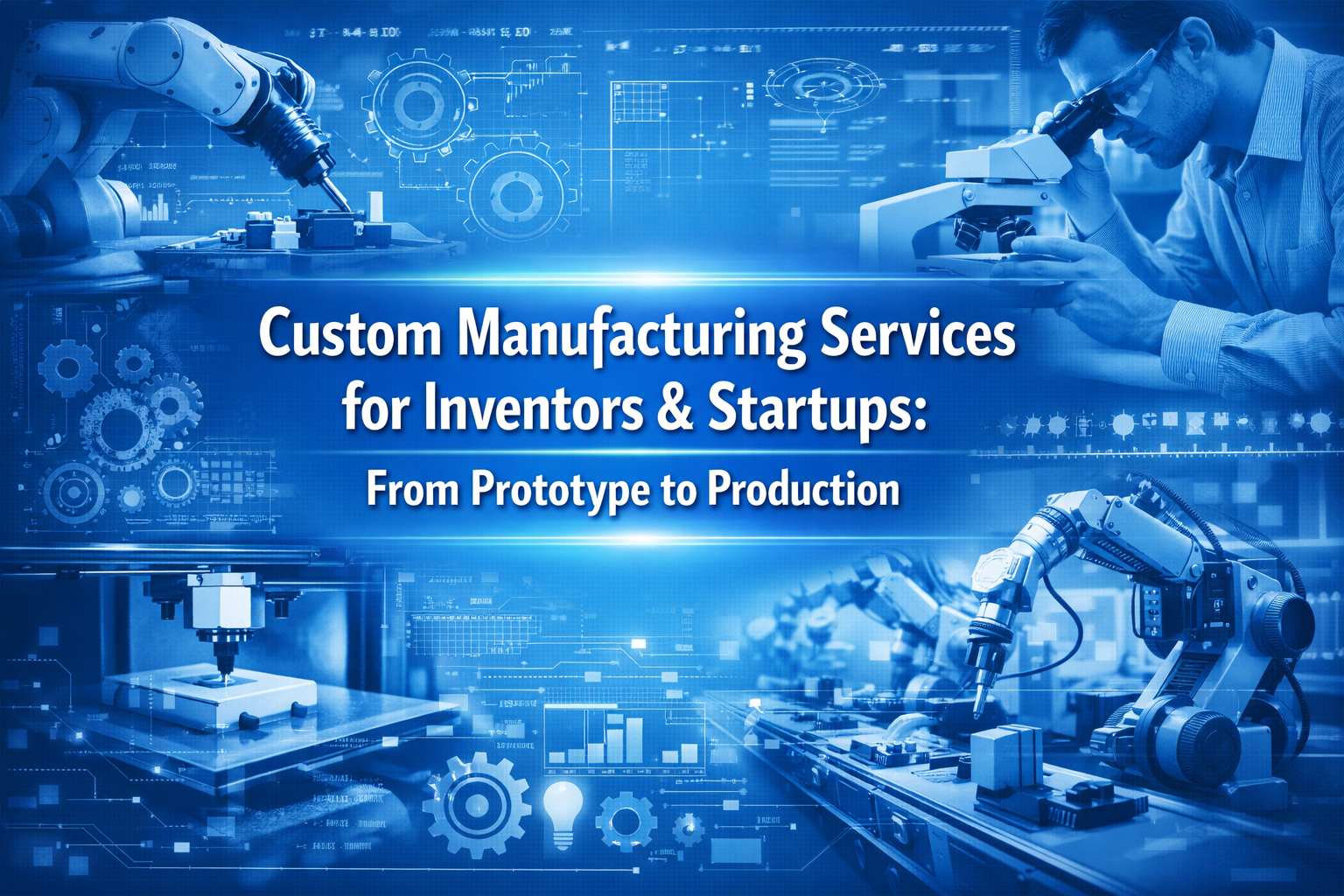
Prototype-to-Production Planning
Manufacturing Readiness Begins Before the Purchase Order
Reliable production depends on requirements, process selection, supplier qualification, quality planning, and economics—not simply finding a factory.
Design Transfer
Translate the product into controlled, buildable specifications.
Process
Select manufacturing methods suited to materials, tolerances, and volume.
Quality
Define inspection, traceability, validation, and change control needs.
Scale
Align tooling, suppliers, unit economics, and ramp-up milestones.
Why Prototypes Do Not Automatically Scale
A prototype proves that a concept can exist. Production requires repeatability. Parts, tolerances, assembly steps, testing, packaging, suppliers, documentation, and quality controls must work together under real cost and volume constraints.
What Manufacturing Preparation Includes
Preparation may include design-for-manufacture review, bill-of-material refinement, supplier strategy, tooling planning, cost modeling, pilot builds, inspection criteria, process documentation, and—where applicable—quality-system and regulatory alignment.
Choosing the Right Manufacturing Partner
The lowest quote is not always the lowest-risk option. Founders should evaluate technical capability, communication, quality history, capacity, lead times, intellectual-property practices, geographical risk, and the supplier’s ability to support controlled change.
How GO Vertical ICM Structures the Pathway
GO Vertical ICM separates validation from execution so founders can make larger commitments only after the opportunity and priorities are clearer.
Stage One
Strategic Discovery
Assess the customer, market, technical feasibility, intellectual property, regulatory considerations, business model, risks, and investor-readiness gaps before major development.
Stage Two
Creation Accelerator Program
Once the direction is selected, advance product development, prototyping, manufacturing preparation, commercialization, and fundraising support through an execution roadmap.
Build the Evidence Before the Ask
Start with Strategic Discovery to determine what should be validated, developed, and funded next. When the pathway is ready for execution, CAP provides the next stage of structured support.