

DIGITAL PRODUCTS · PHYSICAL PRODUCTS · FOUNDER EXECUTION
Founders Need a Development Pathway, Not More Generic Advice
Digital, physical, and connected products carry different execution risks, but each requires disciplined validation, prioritization, commercialization planning, and milestone ownership.
Digital
Validate workflow, adoption, data, architecture, and scalability.
Physical
Address engineering, testing, cost, and manufacturability.
Connected
Align hardware, software, data, usability, and compliance.
Commercial
Build the route to customers alongside the product.
Advice Is Easy. Building a Company Is Hard.
Every founder receives advice.
Talk to customers.
Build an MVP.
Move faster.
Raise capital.
Find product-market fit.
Launch sooner.
While much of this advice is well-intentioned, advice alone rarely solves the challenges founders face when building real companies.
The reality is that most founders do not need more opinions.
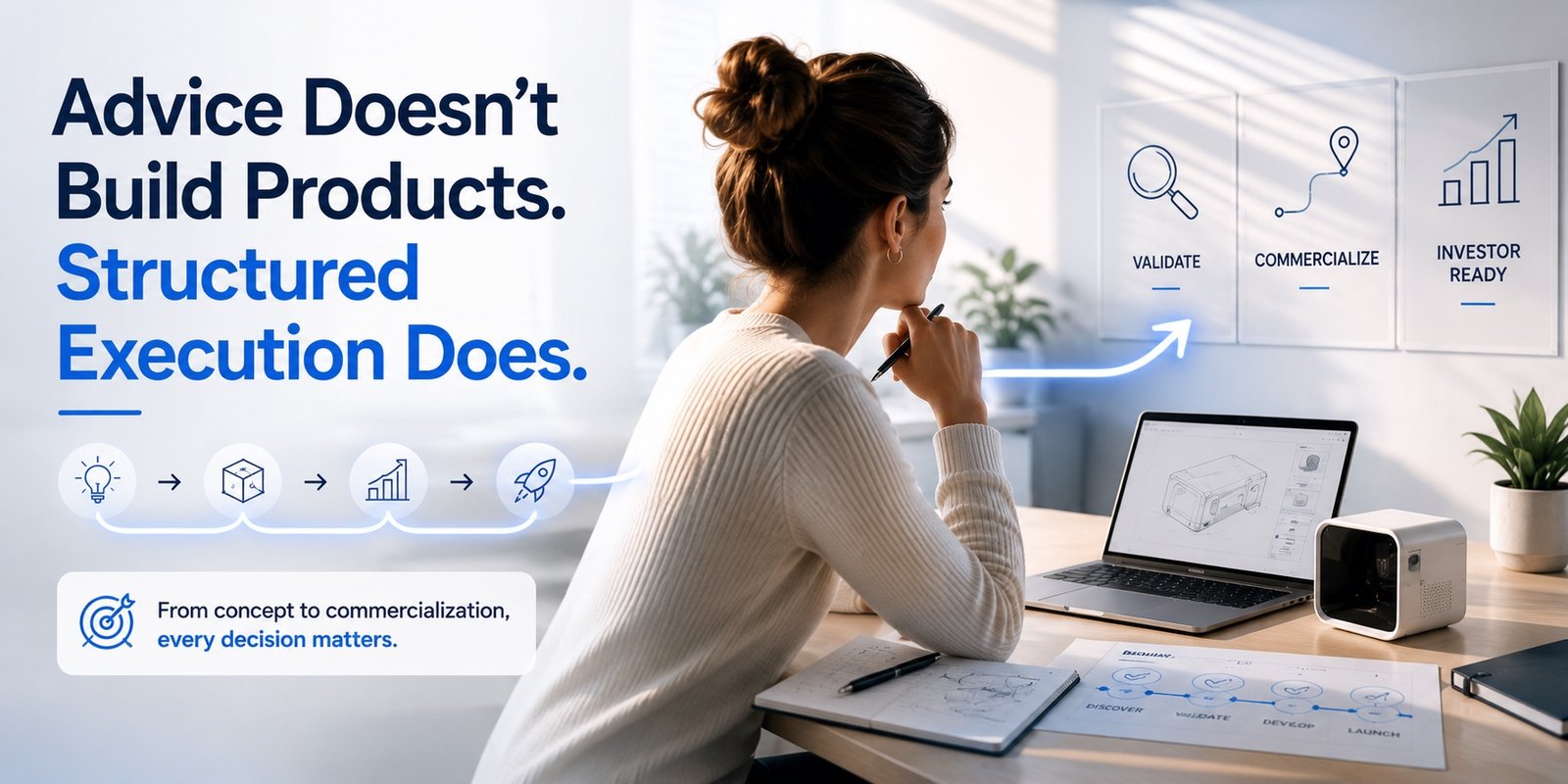
They need a structured pathway.
They need help understanding what to prioritize, what to validate, what to delay, and what steps should come next.
That is particularly true for founders building products.
Whether the product is digital, physical, or a combination of both, success depends on making hundreds of interconnected decisions that affect development, commercialization, adoption, and future growth.
That is why GO Vertical ICM developed Hybrid CAP as part of its broader Creation Accelerator Program (CAP) framework.
Learn more about CAP:
https://goverticalicm.com/the-creation-accelerator-program/

The Gap Between an Idea and a Business
Many founders have a strong vision.
What often creates challenges is everything that comes after the vision.
Questions begin to emerge quickly:
- What should be built first?
- What assumptions need validation?
- Who is the first customer?
- How should the product be positioned?
- What development decisions matter most?
- What risks should be addressed early?
- How will the product reach the market?
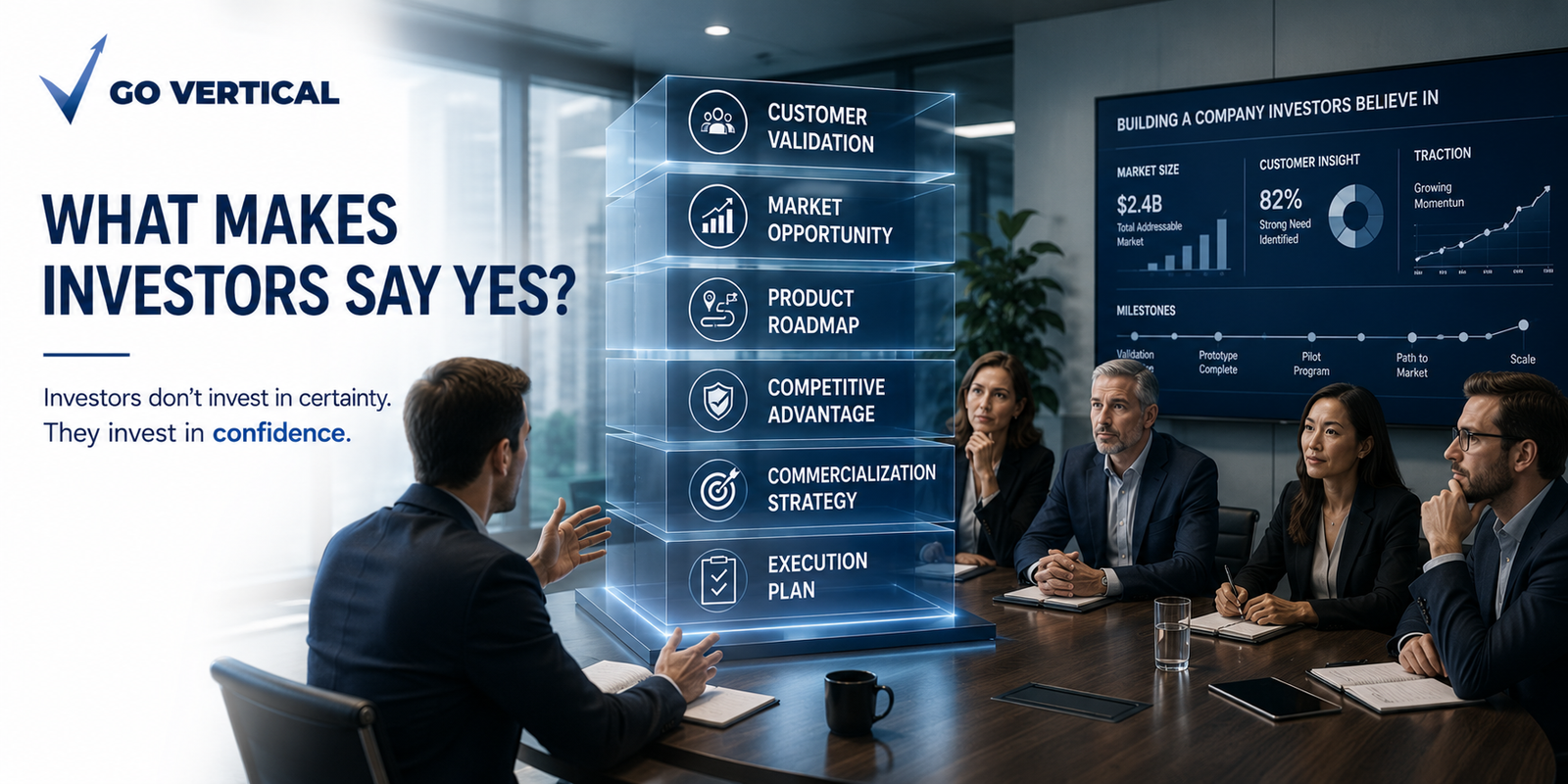
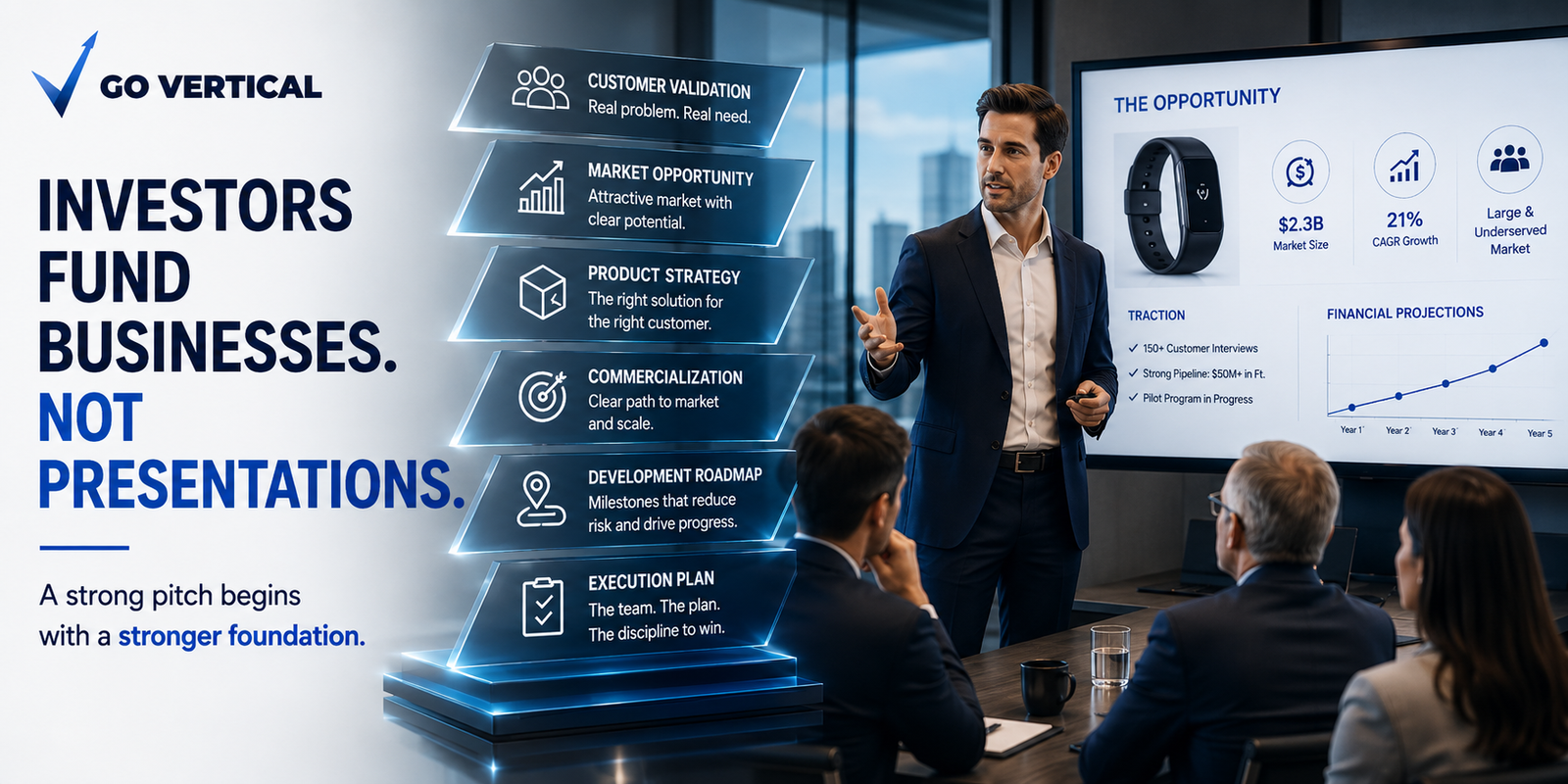
- What makes the opportunity credible to investors?
These questions cannot be answered through generic advice alone.
They require thoughtful planning, structured support, and informed decision-making.
That is where many founders need help.
Why Digital Products Still Need Structure
There is a common misconception that digital products are easier to build.
While software may not require manufacturing, it introduces its own challenges.
Digital founders must still determine:
- user needs;
- customer acquisition pathways;
- feature priorities;
- development scope;
- adoption barriers;
- monetization strategies;
- product differentiation;
- scalability considerations.
Without structure, founders can spend months—or years—building features that customers never requested.
The result is wasted resources and delayed traction.
Hybrid CAP helps founders evaluate these decisions before development costs become significant.
Physical Products Carry Additional Complexity
For physical product founders, the stakes can be even higher.
Every decision affects cost, manufacturability, timelines, and customer experience.
Physical product founders often face challenges related to:
- product design;
- prototyping;
- manufacturing readiness;
- supplier evaluation;
- packaging;
- production costs;
- testing requirements;
- fulfillment planning;
- commercialization pathways.
A promising idea is not automatically a manufacturable product.
And a manufacturable product is not automatically a successful business.
The path requires careful planning and disciplined execution.
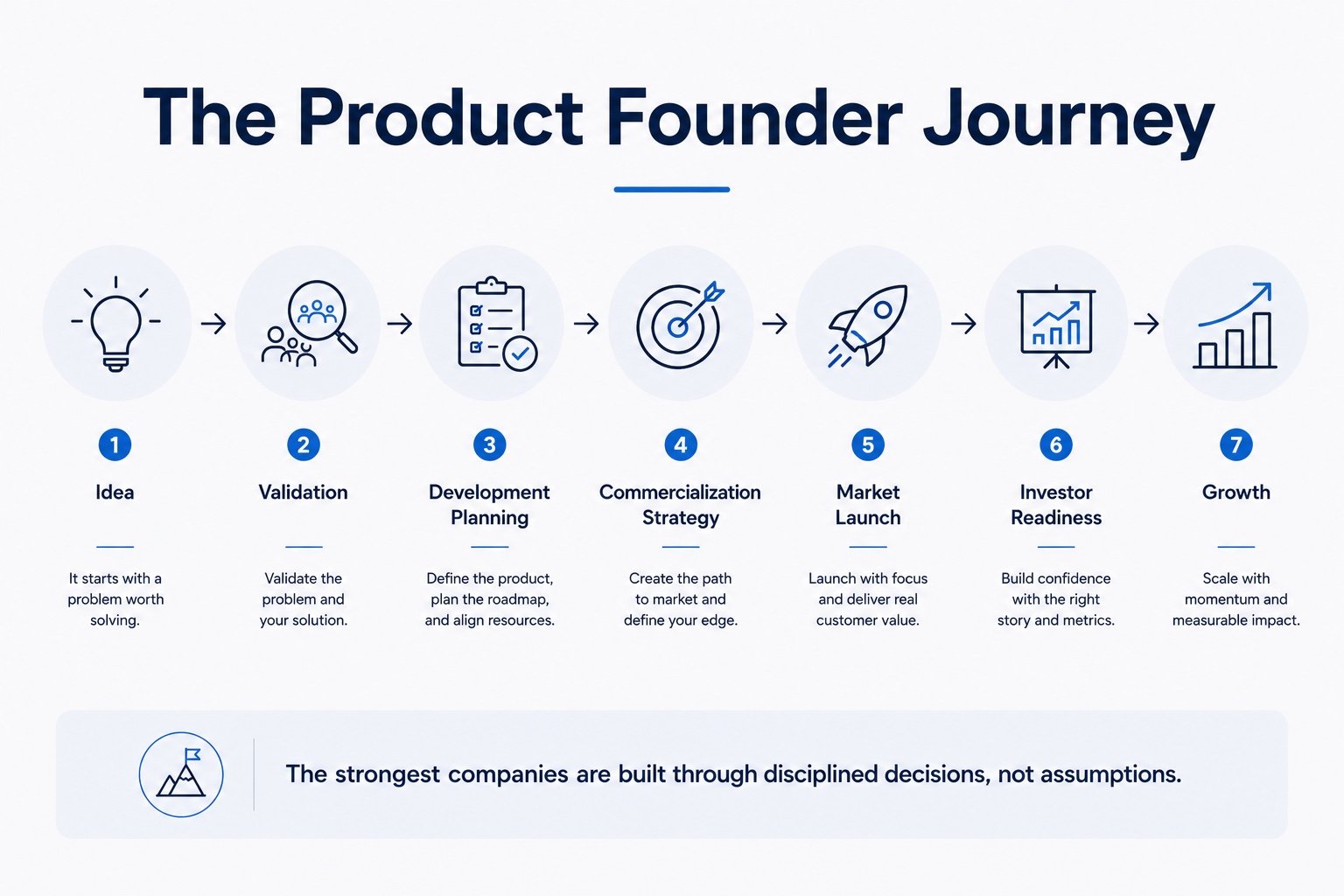
What Founders Actually Need
Most founders already know their idea is interesting.
What they need is support turning that idea into a viable company.
That support often includes:
Product Clarity
Understanding exactly what should be built first and why.
Market Validation
Identifying who the product serves and what problem it solves.
Development Planning
Creating a realistic roadmap for development, testing, and refinement.
Commercialization Strategy
Determining how the product will enter the market and gain adoption.
Brand Positioning
Building a narrative that resonates with customers, partners, and investors.
Investor Readiness
Strengthening the strategic foundation behind future fundraising conversations.
These are the areas where structure creates value.
How GO Vertical ICM Structures the Pathway
GO Vertical ICM separates validation from execution so founders can make larger commitments only after the opportunity and priorities are clearer.
Stage One
Strategic Discovery
Assess the customer, market, technical feasibility, intellectual property, regulatory considerations, business model, risks, and investor-readiness gaps before major development.
Stage Two
Creation Accelerator Program
Once the direction is selected, advance product development, prototyping, manufacturing preparation, commercialization, and fundraising support through an execution roadmap.
Build the Evidence Before the Ask
Start with Strategic Discovery to determine what should be validated, developed, and funded next. When the pathway is ready for execution, CAP provides the next stage of structured support.