

Investor Alignment
The Right Investor Brings More Than Capital
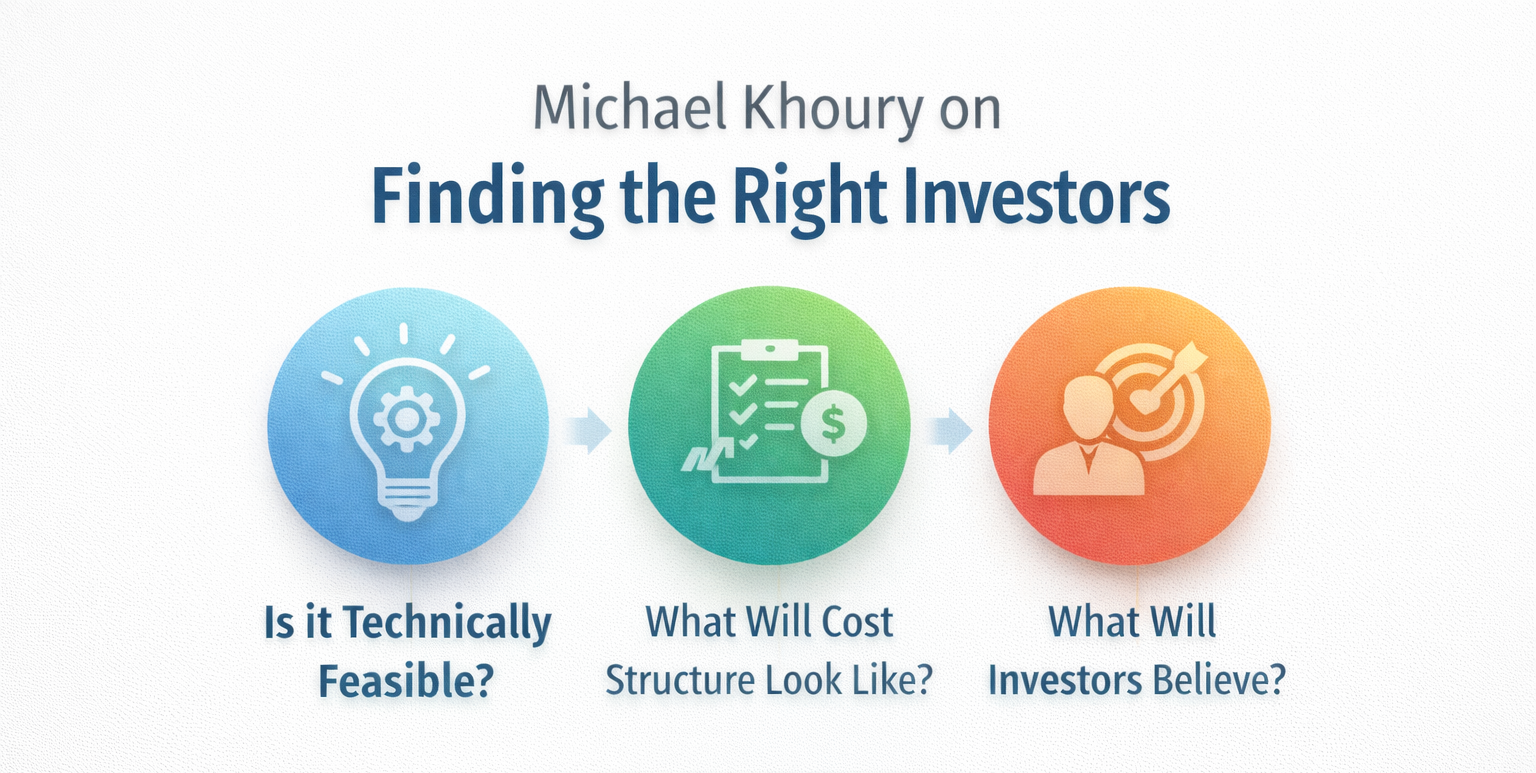
Michael Khoury’s Business.com perspective emphasized that fundraising begins with readiness, alignment, and a clear understanding of what the company needs next.
Readiness
Know the evidence, milestones, risks, and capital required for the next stage.
Thesis
Target investors whose sector, stage, geography, and check size fit.
Value
Assess strategic knowledge, relationships, and follow-on capacity.
Alignment
Clarify expectations around timing, governance, growth, and outcomes.
Investors Evaluate Execution Risk
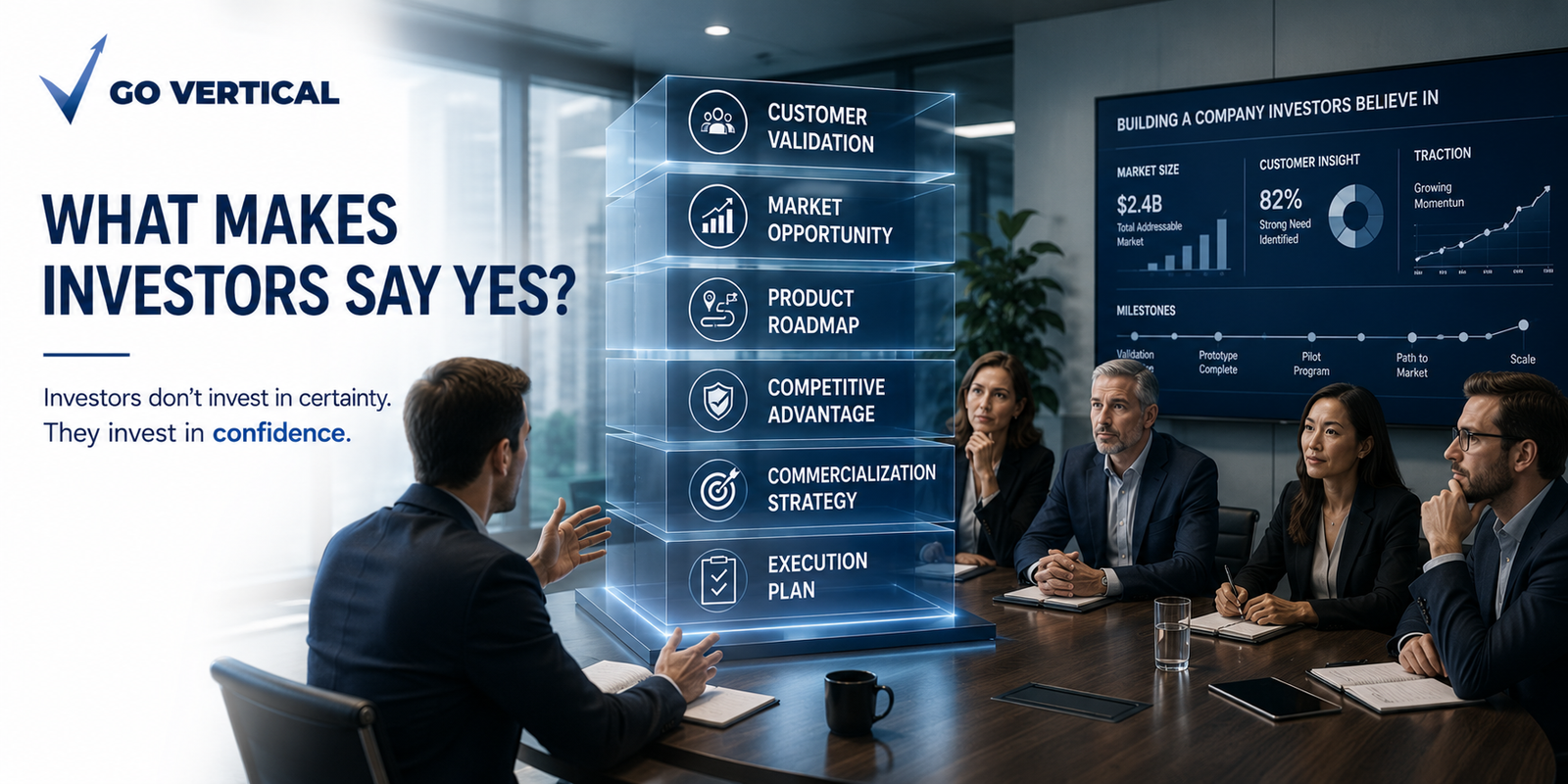
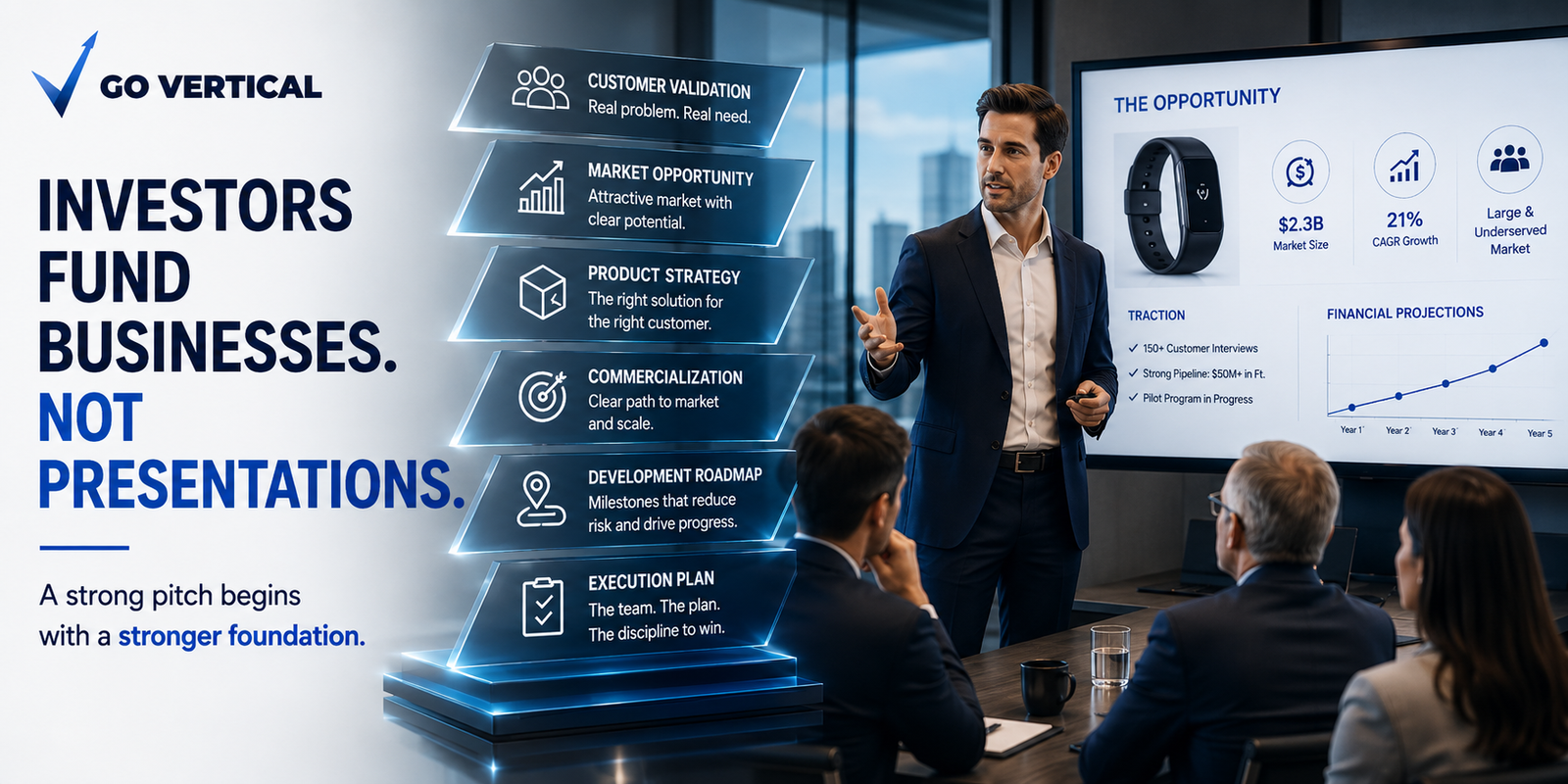
Founders are not raising money for an idea alone. Investors want to understand the team, market evidence, technical pathway, intellectual property, economics, risks, and the milestones their capital will enable.
Targeting Matters More Than Volume
A long list of unrelated investors is less useful than a focused pipeline. Research investment thesis, portfolio fit, stage, typical ownership, decision process, and whether the investor can support the company beyond the initial check.
Prepare for a Two-Way Decision
Investor selection is also a founder decision. References from portfolio companies, clear term expectations, and candid discussion of strategy help determine whether the relationship can support the company through difficult decisions.
From Insight to Structured Execution
GO Vertical ICM separates validation from execution so founders can commit larger resources only after the opportunity, risks, and priorities are clearer.
Stage One
Strategic Discovery
Validate the customer, market, technical feasibility, intellectual property, regulatory considerations, business model, risks, and investor-readiness gaps.
Stage Two
Creation Accelerator Program
Advance product development, prototyping, manufacturing preparation, commercialization, and fundraising through a structured execution roadmap.
Build With Evidence
Start with Strategic Discovery to determine what should be validated, developed, and funded next.