Turn a Defined Product Opportunity Into an Engineered, Testable Product Direction
Go Vertical’s R&D service helps physical-product founders and innovation teams translate a validated opportunity into technical requirements, engineered concepts, prototypes, and evidence for the next investment decision. If you are still deciding what should be built and why, start with Strategic Discovery. R&D begins when the product direction is sufficiently defined to move into development.
Who This R&D Service Is For
A strong fit for founders, product owners, R&D teams, and corporate innovation groups with a defined product opportunity that now requires engineering, design refinement, prototyping, or technical risk reduction. It is not intended to replace early opportunity validation or guarantee that a concept will become commercially viable.
Research & Development (R&D) - The Backbone of Innovation:
R&D is a critical phase where ideas are explored and tested to create new products or improve existing ones. This stage involves rigorous experimentation, feasibility studies, and technological assessments to ensure that the concept is viable and can be developed into a functional product. Effective R&D lays the groundwork for innovation, guiding inventors through the process of transforming an idea into a tangible, marketable solution.
Intellectual Property Protection - Safeguarding Your Innovation:
Protecting your invention with intellectual property rights is paramount to prevent unauthorized use or replication of your ideas. Patents, trademarks, and copyrights are different forms of protection that inventors can use depending on the nature of their invention.
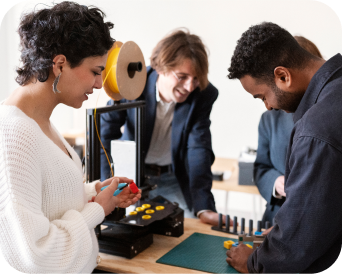
Prototyping is the process of creating a working model of your product to test its functionality, design, and user interaction. It allows inventors to identify any design flaws or necessary improvements early in the development process, saving time and resources. Prototypes can range from simple, handcrafted models to advanced, functional prototypes made using 3D printing or CNC machining, providing a tangible representation of the product for further refinement.
Understanding and complying with relevant regulations and standards is critical to bringing a new product to market. This might include safety certifications, environmental regulations, and industry-specific standards. Early identification of applicable regulations can help avoid costly redesigns or delays in the product launch, ensuring a smooth path to market entry.
Design for Manufacturing (DFM) - Ensuring Product Viability:
DFM is the practice of designing products in such a way that they are easy and cost-effective to manufacture. This involves considering the manufacturing process during the design phase to simplify assembly, reduce material costs, and minimize production errors. DFM is crucial for inventors as it can significantly impact the scalability and profitability of the product.
Depending on the agreed scope, an R&D engagement may include: • product requirements and engineering criteria; • concept development and design refinement; • CAD, material, and manufacturing analysis; • prototyping and test planning; and • a technical risk register with recommended next steps. You receive documented work that helps your team decide what to refine, test, fund, or prepare for manufacturing.
Not sure whether R&D is the right next step? Strategic Discovery can clarify the technical and commercial questions before development begins.
We begin by aligning on the product requirements, evidence already available, and the decisions the engagement must support. The work then progresses through focused engineering, design, prototyping, and testing activities. Each phase is reviewed before additional investment is committed, so your team can refine the direction as evidence develops.
Experience Across Product Categories
Consumer Goods
Elevating everyday experiences with innovative products crafted from premium plastics and metals
Consumer Electronics
Bringing technology to life with advanced consumer electronics designed for durability and performance.
Therapeutic Devices
Enhancing patient care through precision-engineered therapeutic devices, meeting the highest medical standards
Medical Devices
Advancing healthcare with reliable and compliant medical devices, from diagnostics to treatment tools
Home & Kitchenware
Transforming living spaces with beautifully designed home and kitchenware, focusing on functionality and style
Pet Supplies
Improving pet care with durable and safe pet supplies, from toys to comfort items, tailored for our furry friends
How an R&D Engagement Can Progress
1. Concept Ideation
Brainstorming and idea generation.
3. Design & Development
Creating detailed designs and prototypes.
5. Engineering Analysis
Performing simulations and stress tests.
7. Design Refinement
Making adjustments based on test outcomes.
9. Manufacturing Setup
Preparing for production, tooling, and assembly lines.
Preparing for production, tooling, and assembly lines.
10. Mass Production
Scaling up for market distribution.
11. Quality Assurance
Continuous monitoring and improvement.
12. Market Launch
Introducing the product to the market.
Ready to move a defined product direction into technical development? Tell us what has already been validated, where the technical uncertainty sits, and what decision your team needs to make next.
R&D Reduces Technical Uncertainty—It Does Not Eliminate It
R&D is an iterative process. Scope, findings, prototypes, and testing can reveal constraints that require refinement or a change in direction. Go Vertical does not guarantee technical feasibility, regulatory approval, manufacturing success, funding, or market adoption. Our role is to help your team generate stronger evidence and make more responsible development decisions.